
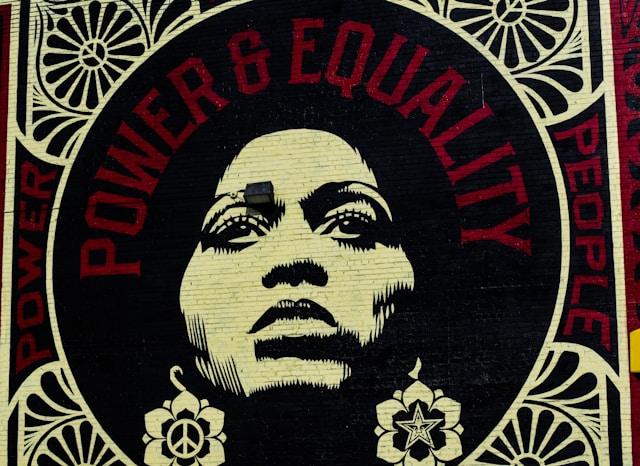
The work doesn't end with the month.
As Sickle Cell Awareness Month (September) draws to a close, we continue to reflect on all the efforts made to raise awareness and to get our voices heard. Sickle cell awareness, however, isn't kept to a single month. For us — and for what we hope of the future — it has to become something greater than thirty days a year. To be known about in our communities. To be talked about. And, one day, to be cured for all.
Section 02 · Why October still mattersOctober brings Black History Month.
October brings about Black History Month — a month recognised by all people to remember the achievements, tribulations, history, culture and identity of Black people. Our brothers in America celebrate this in February, but as we are based in the UK we celebrate it now.
So why are we talking about Black History Month on a page about sickle cell? Because there's no such thing as too much information. Sickle cell is a disease which affects, but is not exclusive to, Black people — and the story of how it has been studied, understood, ignored and finally taken seriously is, in the UK, inseparable from the broader story Black History Month sets out to tell.
Section 03 · Knowledge is powerA mutation, a hundred years on.
Evolutionary biologists believe sickle cell is a mutation that, over time, was designed to combat malaria — a body adapting to a hostile environment, and paying for it in the next generation. The first clinical case was discovered over one hundred years ago. As much as we would love to erase it, sickle cell is part of Black history. And that makes it a talking point worth keeping.
The first clinical case of sickle cell was described in 1910 — a century in which the condition has been understood, ignored, and now slowly, finally, addressed.
The questions we want to sit with.
Across this October — and for as many Octobers as it takes — these are the questions we want to keep returning to. They aren't ours to answer alone; they belong to the warriors, the families, the clinicians and the communities who carry sickle cell forward.
- How have we moved forward with sickle cell — clinically, culturally, politically?
- Did people in earlier generations even know they had it? Or did they just live with the pain?
- What are the changes that have happened over time — and which ones are real, not cosmetic?
- Have we progressed in the awareness and mentality around the disease, both inside and outside the community?
- What does it look like for sickle cell to be, like Black History, part of the conversation?
These are the themes we hope to explore over the coming month. We'd love to hear yours, too.